Self-mastery outcome
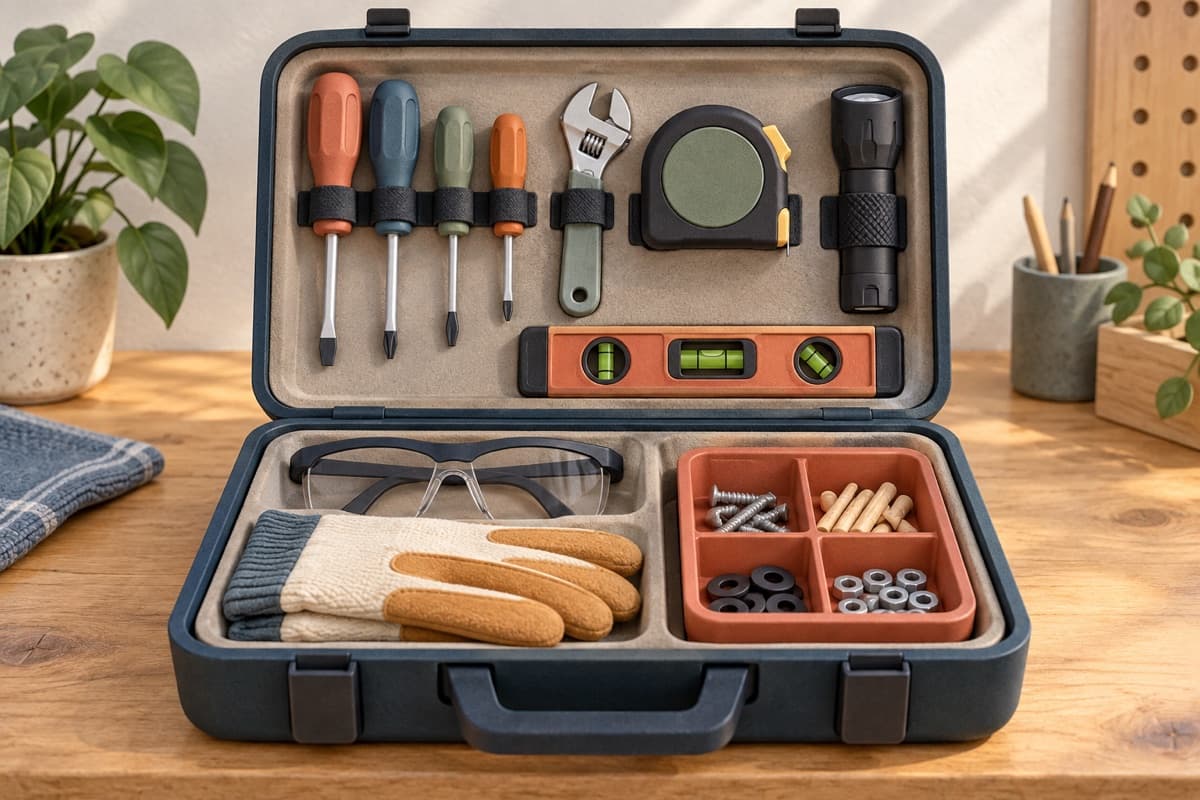
Build a basic tool kit
Assemble a compact set of correctly sized hand tools, measuring tools, and protective equipment for the low-risk tasks you actually perform.
Success framing
What useful progress looks like
Tools are appropriate, in good condition, stored safely, and paired with instructions and protective equipment for a defined low-risk task.
Who this is for
Renters, homeowners, and beginners who want useful basics without buying a large collection or using the wrong tool for hazardous work.
Curated sequence
Learn in order, then act
Embeds load lazily through youtube-nocookie.com; every item keeps attribution, original context, and a source fallback.
Tool Recommendations for New Homeowners | Ask This Old House
This Old House
A practical audiovisual orientation for this Outcome from a comparatively credible, low-hype source. Apply it through the bounded exercise below rather than treating every statement as universal.
- Key takeaway
- Define the real problem and constraints before adding tools or effort.
- Action
- Watch the selected video with notes on the method, assumptions, and limits.
This Old House via YouTube
Action plan
Take the smallest useful next step
- Watch the selected video with notes on the method, assumptions, and limits.
- Complete the practice action: Start with a tape measure, level, flashlight, screwdrivers or bit driver, adjustable wrench, pliers, utility knife, hammer, and suitable eye and hand protection; inspect and label storage.
- Verify one consequential claim or safety rule with a current authoritative source.
- Record the result, one remaining question, and the next review date.
Important boundary
Do not treat tool ownership as competence. Follow manuals, guards, ratings, ventilation, battery and blade safety, child-safe storage, and stop rules for electrical, gas, structural, ladder, code, or permit work.
Continue